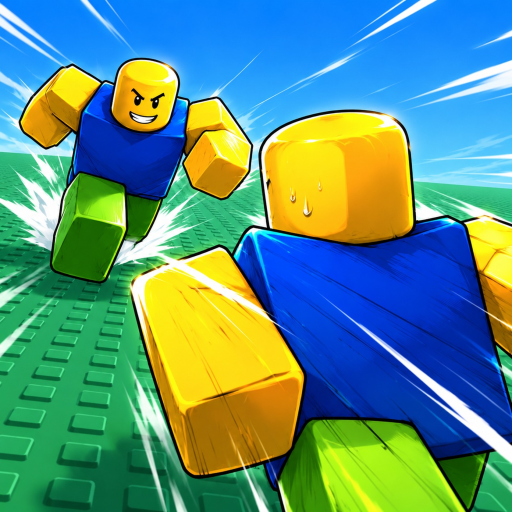
Huss Valley: Improve Speed and Turning With Momentum
Understand gradual acceleration in Huss Valley, plan turns earlier, and connect movement timing to a crossing you can finish.
To move more effectively in Huss Valley, account for momentum: speed builds gradually while you hold a direction and falls gradually after you release it. Plan a turn before the last possible moment so you have space to follow the new direction.
Why a late turn feels slow
Your character does not immediately reach full speed after a direction key is pressed. Releasing the key also does not produce an instant stop. These two rules make the timing of a direction change important, especially when you are already committed to a crossing.
This movement introduction shows the game in motion. Pay attention to how the crossing direction changes rather than copying a dramatic dodge without understanding its setup.
If you wait until an opponent is directly in your path, you are asking a gradual movement system to solve an immediate space problem. My recommendation is to choose the next direction while there is still room to use it. That follows from the momentum rules; it is not a promised escape technique.
Give acceleration a destination
Commit to a useful opening instead of alternating directions without a plan. Every new direction should answer a concrete question: where will this take you relative to the opponent and the finish side? A longer stretch toward an opening can be more purposeful than several short movements that keep you in the same danger area.
This does not mean running straight through a chaser. It means keeping the destination in view while you make the turn. After creating lateral space, look for the moment when you can continue toward the other side rather than extending the dodge indefinitely.
When the field is crowded, choose a route with enough room for your next adjustment. A narrow opening that requires an immediate reversal asks more of your timing than one that lets you continue moving. Use the opening you can actually follow, rather than the one that only looks shortest on the ground.
Diagnose the moment the route fails
| What happens | Momentum-based interpretation | Recommended adjustment |
|---|---|---|
| You expect instant speed from a standstill | Acceleration takes time | Begin moving toward a selected opening earlier. |
| You release a key but keep moving | Deceleration is gradual | Allow room before a point where you need to change course. |
| The turn begins after the opponent reaches your line | The direction decision came too late | Choose the new line while you still have space. |
| You dodge but never reach the destination | The movement lost its crossing purpose | Use the space gained to resume progress toward the finish. |
Pick the adjustment that matches your last failed crossing. If acceleration was the problem, change when you start moving. If the turn was the problem, change where you decide to turn. Those are different corrections, and practicing both at once can hide which one helped.
Improve control before searching for a speed shortcut
The established movement rules explain why a character can feel slower than expected without proving a hidden speed upgrade is required. Start by using the available acceleration and deceleration more deliberately. This gives you something practical to improve even when you have not purchased anything.
Judge the result through the crossing: did the earlier decision leave room to steer, and did the new route keep you moving toward the opposite side? A successful turn that still leaves you circling the same opponent needs a destination adjustment, not simply another turn.
For the actual key combinations, return to controls. Use this page for timing decisions after the inputs themselves are familiar. Keeping the two lessons separate avoids treating a route-choice mistake as a missing keyboard command.
Speed questions
Is there a universal fastest route?
The useful route depends on the players occupying the field. Choose an opening you can follow with the game's gradual acceleration and deceleration.
What should I change after a failed turn?
Change the point where you commit to the new direction. Give that turn enough room before deciding that the input itself is wrong.